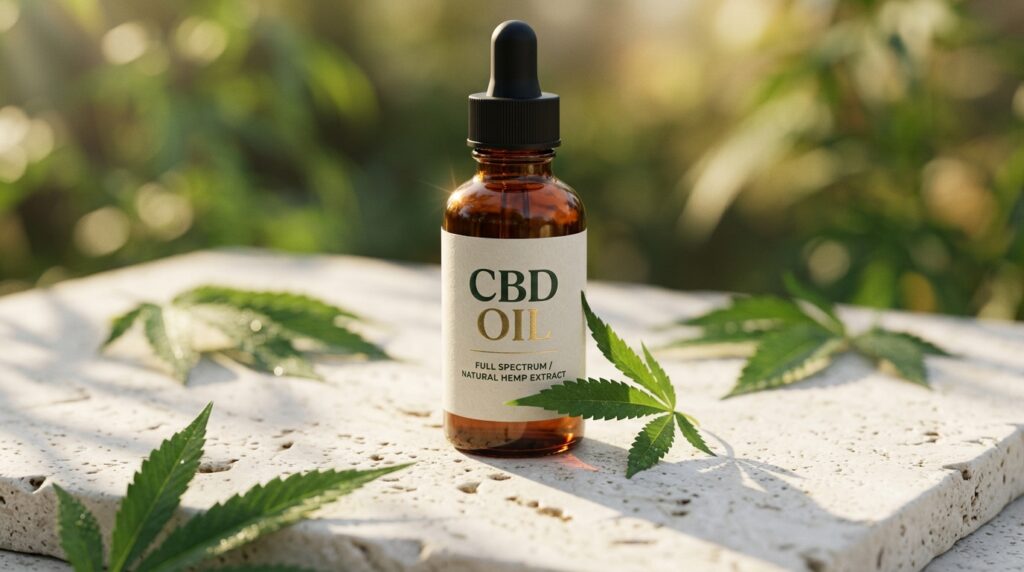
The most interesting products are not always the ones with the loudest advertising. Some deserve attention because their labels are clear, their ingredients are disclosed, and their manufacturers provide useful documentation. Others may look appealing at first but leave important questions unanswered. When researching CBD Oil, a productive approach is to treat each product as a set of claims to investigate rather than a promise to accept. That mindset encourages better questions and helps shoppers identify options that merit a closer look.
Look for Information That Makes a Product Understandable
A product is easier to evaluate when the manufacturer explains exactly what is being offered. Start with the basic details: CBD content, bottle volume, extract type, complete ingredients, intended audience, and safety instructions.
CBD stands for cannabidiol, a compound found in cannabis plants. Products marketed as hemp-derived CBD may use different extracts and carrier oils, so two bottles with similar names can have different compositions.
The amount of CBD should be clearly identified in milligrams. Bottle volume should also be available, because the total amount alone does not reveal the concentration. A listing that gives neither a clear CBD amount nor sufficient information to understand the formula is difficult to compare responsibly.
Look for a description that explains the product without relying entirely on broad promotional phrases. Words such as premium, pure, or advanced may appear in marketing, but they do not independently establish what the bottle contains or how it was tested.
Make clarity your first screening test
A promising product listing should answer these questions:
- What is the total CBD content?
- How much liquid does the bottle contain?
- Which other ingredients are included?
- Is the extract type identified?
- Is the product intended for people or a specific animal?
- Are relevant warnings and storage instructions provided?
- Can the seller supply supporting laboratory information?
If a seller cannot answer basic questions, there is little reason to move immediately to a checkout page. Continue researching products with more complete information instead.
Investigate the Extract Behind the Label
The word CBD describes cannabidiol, but finished products can contain different combinations of hemp compounds. Understanding the extract type helps explain those differences.
Full-spectrum extracts generally contain CBD along with other naturally occurring hemp compounds and may include trace amounts of THC. Broad-spectrum products usually retain CBD and selected other compounds while removing or reducing THC. CBD isolate contains cannabidiol separated from most other hemp compounds.
These categories are not a simple ranking of product quality. More compounds do not automatically mean better results, and a product with a simpler cannabinoid profile is not necessarily suitable for every situation.
The actual formula matters more than the category name alone. Check the ingredient list and available laboratory report to understand the composition of the product being considered.
Understand why THC information matters
THC is the cannabinoid primarily associated with the intoxicating effects of cannabis. Its presence may be important when comparing products, especially when the intended user is a pet.
A label that describes a product as broad-spectrum does not independently prove that no THC is present. Laboratory findings can help show what was detected in the tested sample and the reporting limits of the method.
For pet owners, avoid assuming that a human CBD formula is suitable for an animal. Different species can respond differently to ingredients, and products containing THC can pose serious risks to pets. Veterinary guidance is important before CBD is introduced into an animal’s routine.
Treat Laboratory Testing as a Research Tool
Independent testing can help shoppers move beyond a manufacturer’s description. A certificate of analysis, commonly called a COA, is a report documenting laboratory findings for a particular sample.
Start by checking whether the report can be matched to the product. The product name, batch number, testing date, and laboratory identity should be visible. If a seller provides a report without clear product identification, ask whether a more relevant document is available.
The report may show cannabinoid measurements and may include screening for selected contaminants. Depending on the test panel, these can include heavy metals, pesticides, residual solvents, and microbial contaminants.
A useful review requires reading what was actually tested. A report that measures CBD and THC does not necessarily establish that the sample was assessed for every possible contaminant. The scope of testing should be clear.
Avoid treating a certificate as a guarantee
A COA provides evidence about the tested sample, but it does not prove that a product treats a medical condition. It also cannot establish that every individual will respond in the same way or that every batch has identical characteristics.
Testing is one part of a broader assessment. Ingredient transparency, manufacturing information, clear instructions, and suitability for the intended user also matter.
If the report contains unfamiliar terms, request an explanation from the seller or ask a qualified professional to help interpret the information. Do not infer that a product is superior simply because its report is longer or contains more technical language.
Investigate the Manufacturer’s Claims
Product claims should be considered separately from product measurements. A statement about bottle volume can be checked directly. A claim that CBD will cure a disease requires a different and much stronger level of evidence.
CBD research continues to develop, and evidence varies by intended use, formulation, and population. Marketing copy may describe potential uses, but it should not be treated as proof of a guaranteed result.
Reviews can still offer practical information. Customers may describe packaging, delivery, ease of reading instructions, or how a seller handled a question. These observations may help assess the shopping experience, but they do not establish that a product is medically effective.
Be skeptical of sellers that promise universal results, claim to replace professional treatment, or use dramatic testimonials as their main evidence. A trustworthy description should be specific about the product and cautious about what remains uncertain.
Questions worth asking a seller
Before buying, consider asking:
- Can the current batch’s laboratory report be provided?
- Does the report identify the same formula shown in the listing?
- Are all ingredients disclosed?
- Has the product formulation changed recently?
- Where can the complete use instructions and warnings be found?
- Who should be contacted if a product question arises?
Clear answers can make a product easier to evaluate. If the seller avoids basic questions, that lack of transparency is relevant to the buying decision.
Compare Products by Their Practical Differences
Products can be worth exploring for different reasons. One may offer a clearly documented concentration, another may provide a more detailed ingredient list, and another may have accessible batch-specific testing.
Do not assume that the product with the most CBD is automatically the best value. Total CBD, concentration, and bottle volume are separate measurements.
For example, a bottle containing 300 mg of CBD in 30 mL has a nominal concentration of 10 mg/mL. A bottle containing 600 mg in 60 mL has the same concentration, even though it contains twice the total amount of CBD and twice the liquid volume.
A 600 mg bottle containing 30 mL has a nominal concentration of 20 mg/mL. This is more concentrated, but concentration alone does not establish that it is appropriate for a particular user.
Compare prices alongside the amount supplied, concentration, documentation, and seller transparency. Consider shipping fees and return policies as well. A low price cannot compensate for missing information that is important to the decision.
Consider Suitability Before Deciding to Use CBD
Researching a product and deciding to use it are separate steps. A well-documented formula may still be inappropriate for a particular person or animal.
For people, CBD may cause side effects and interact with certain medications. Anyone taking prescription medicine, managing a medical condition, or who is pregnant or breastfeeding should consult a qualified healthcare professional before using it.
For pets, a veterinarian should assess the animal’s health history, current medication, and proposed product. Evidence for many advertised uses in animals remains limited, and a supplement should not delay the investigation of new or worsening symptoms.
If an animal’s behavior, appetite, movement, or energy changes unexpectedly, seek veterinary advice instead of relying on a product description. The underlying cause may require a different approach.
Do not stop prescribed treatment or replace it with CBD without professional direction. If a person or pet develops a concerning reaction, seek appropriate medical or veterinary advice. For suspected accidental ingestion of THC or an unknown quantity of CBD by a pet, contact a veterinarian or animal poison service promptly.
Create a Research File for Your Shortlist
Keeping notes can prevent repeated research and make comparisons more objective. Record each product’s name, CBD amount, bottle size, extract type, ingredients, and available testing information.
Add a note about any missing details and the questions that remain unanswered. This creates a useful distinction between a product that has been carefully evaluated and one that simply looks appealing.
Before placing an order, revisit the actual product listing and verify that the details have not changed. Product formulations, packaging, and batch reports may be updated over time.
Keep the original packaging and purchase receipt after delivery. If the product is intended for an animal and a veterinarian has approved its use, the packaging may help identify the exact formula if a concern develops.
Final Thoughts
Products worth exploring are those that provide clear information, meaningful documentation, and realistic descriptions of their intended use. Extract type, concentration, ingredients, and laboratory testing offer useful points of comparison, but none guarantees a particular outcome. Research carefully and seek qualified professional advice before using CBD for a health concern or giving it to a pet.